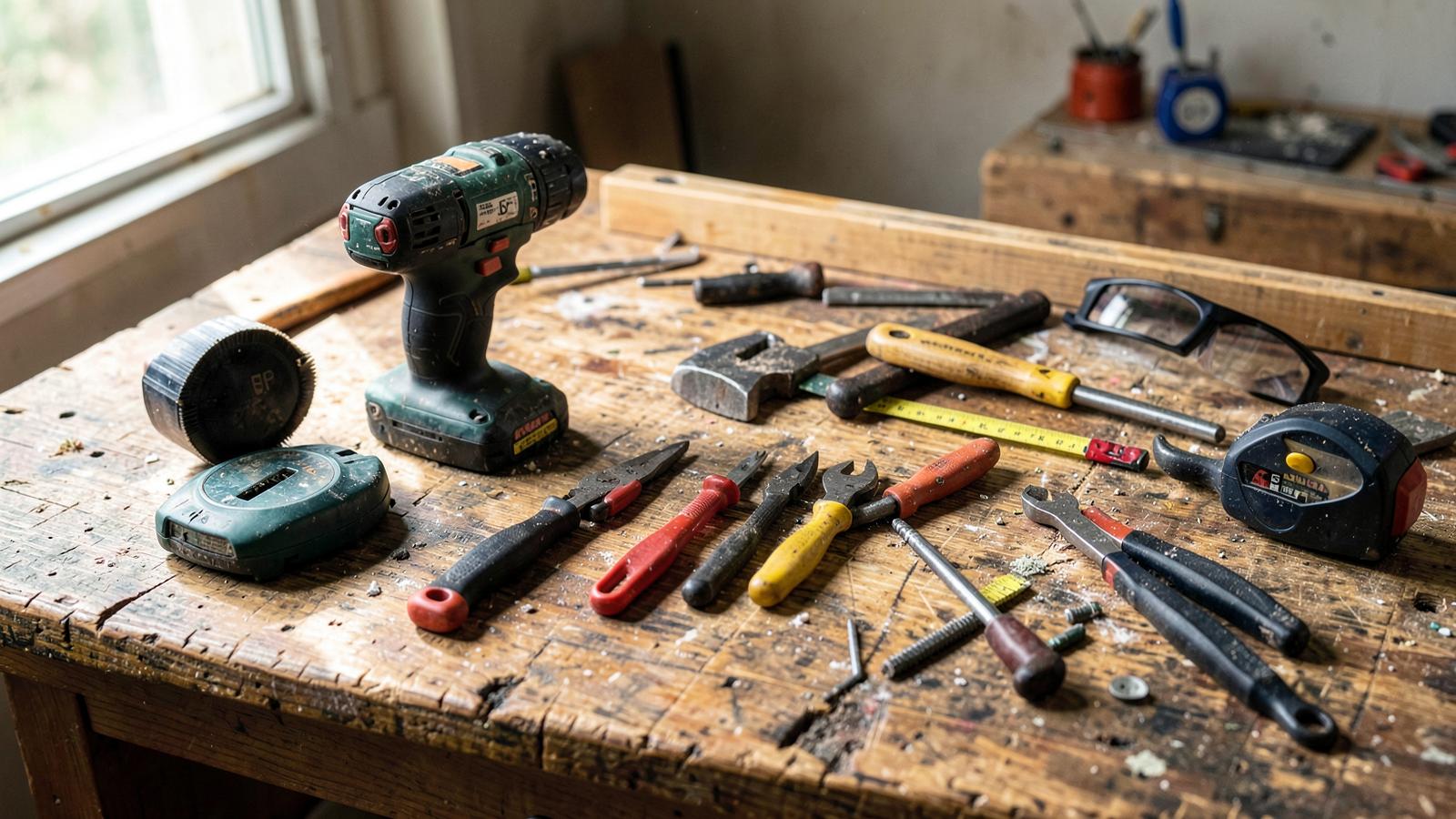
Essential Hand & Power Tools Every DIYer Needs
Build a compact, capable toolkit for everyday repairs without wasting money on specialty tools you may never use.
Difficulty
Beginner
Time
1–2 hours to assemble and organize
Overview
A useful home toolkit is not the biggest set on the shelf. It is a small group of dependable tools that helps you tighten a hinge, hang a shelf, stop a drip, patch a wall, and tackle a weekend project without improvising. This guide builds that kit in practical layers so you can buy the basics well and add specialty tools only when a real job calls for them.
Tools & materials
Tools
- 25-foot tape measure
- Torpedo and 24-inch levels
- Claw hammer
- Multi-bit screwdriver
- Adjustable and tongue-and-groove pliers
- Utility knife
- Cordless drill/driver
- Non-contact voltage tester
Materials
- General-purpose drill and driver bit set
- Picture hooks and wall anchors
- Assorted wood and machine screws
- Spare utility blades
- Divided fastener organizer
- Safety glasses, hearing protection, and dust masks
Step-by-step instructions
- 1
Start with measuring and marking
Choose a readable 25-foot tape with a lock you can use one-handed. Add a compact torpedo level for fixtures and a 24-inch level for shelves and cabinets. A combination square gives you reliable 90-degree marks and repeatable offsets from an edge.
A stud finder is useful, but scan from both directions and mark both edges before choosing the center. Confirm uncertain locations with a tiny test hole where it will be hidden, especially near plumbing or wiring.
- 2
Choose versatile hand tools
A 16-ounce claw hammer, multi-bit screwdriver, needle-nose pliers, tongue-and-groove pliers, and adjustable wrench cover most common hardware and fixture jobs. A five-in-one painter’s tool and flexible putty knife scrape, spread filler, remove caulk, and lift trim more safely than a screwdriver.
Favor comfortable handles, solid joints, and replaceable blades over oversized sets. Test ratchets and pliers in your hand before buying; a tool you can control is safer and more useful than one with dozens of features.
- 3
Make a drill your first power tool
For most homes, a cordless drill/driver is the best first power tool. A compact 12-volt model suits furniture and fixtures; an 18- or 20-volt platform offers more power and a wider family of compatible tools. Two batteries keep work moving while one charges.
Pair it with common twist bits, masonry bits, and Phillips, slotted, Torx, and square-drive bits. Begin with a low clutch setting when driving screws, then increase it until the head sits flush without stripping.
- 4
Add cutting and fastening basics
A compact handsaw and fine-tooth hacksaw handle wood, plastic, and light metal. For larger work, a circular saw with a straightedge guide is more versatile than many specialty saws. Keep picture hooks, anchors, screws, washers, and felt pads in a divided organizer.
Always choose the fastener for the load and wall type. Light objects may use drywall anchors, while cabinets and heavy shelves should fasten to framing or correctly rated masonry anchors.
- 5
Create one dependable storage system
Store the core kit in one portable box or open tote, with drill bits and fasteners in labeled cases. Return every item after use, recharge batteries, and replace worn blades promptly. A modest kit you can find and trust solves more problems than a crowded garage full of mystery parts.
Common pitfalls & troubleshooting
A screw keeps stripping
Use the exact bit type and size, lower the drill speed, and increase clutch torque only as needed.
An anchor spins in drywall
Remove it and use the next correctly rated size, or relocate the fastener into a stud.
A drill bit wanders
Mark the center with an awl, start slowly, and keep the drill square to the surface.
Build around the jobs your home actually needs. With sound measuring tools, versatile hand tools, a drill, sensible protection, and organized fasteners, you will be ready for most everyday fixes without overbuying.